

Best Gentle Shampoo for Chemotherapy Scalp Care
Table of Contents
- Why Chemotherapy Makes Your Scalp So Sensitive
- What to Look For in a Gentle Shampoo for Chemotherapy Scalp
- Our Top Pick: Ultra Sensitive Shampoo & Body Wash Bar
- Chemotherapy Scalp Care Tips for Washing and Daily Comfort
- Cold Capping and Scalp Cooling: What Shampoo Works Best
- When to Call Your Care Team About Scalp Changes
- Conclusion
- Frequently Asked Questions
Last Updated: September 30, 2026
Why Chemotherapy Makes Your Scalp So Sensitive
Chemotherapy targets fast-dividing cells, and hair follicle cells divide faster than almost any other type, making the scalp one of the first places side effects appear, often within two to four weeks.
What to Look For in a Gentle Shampoo for Chemotherapy Scalp
The best gentle shampoo for chemotherapy scalp uses mild surfactants, skips fragrance and drying alcohols, and lands near skin's natural pH of about 5.5. Anything harsher strips the lipid layer your scalp is already struggling to rebuild.
The pH Factor Most Guides Skip
Healthy skin maintains an acid mantle around pH 4.5 to 5.5, a slightly acidic film that keeps the microbiome balanced and the moisture barrier intact. Chemotherapy disrupts that balance, making the scalp more alkaline and inviting irritation.
Surfactant Names to Know
"Sulfate-free" is a start, but not all sulfate-free surfactants are equal:
Gentle surfactants (look for these):
- Sodium cocoyl isethionate, coconut-derived, low irritation
- Cocamidopropyl betaine, mild, plant-derived
- Sodium lauryl sulfoacetate, large molecule, doesn't penetrate skin deeply
- Decyl glucoside and lauryl glucoside, sugar-based, very mild
Harsher surfactants (avoid):
- Sodium lauryl sulfate (SLS), strips lipids aggressively
- Sodium laureth sulfate (SLES), milder than SLS but still drying
- Ammonium lauryl sulfate, similar to SLS
- Sodium C14-16 olefin sulfonate, can be irritating on compromised skin
The Red-Flag Ingredient List Beyond Sulfates
Most guides stop at sulfates and fragrance. But several other compounds trigger inflammation on a chemo-sensitive scalp:
- Methylisothiazolinone (MI) and methylchloroisothiazolinone (MCI), preservatives linked to contact dermatitis; increasingly restricted in leave-on products in the U.S. and banned in the EU for leave-ons
- Cocamidopropyl betaine, generally gentle, but trace impurities (amidoamine) can cause reactions in sensitive individuals
- Propylene glycol, penetration enhancer that can sting compromised skin
- Alcohol denat, SD alcohol, isopropyl alcohol, strip moisture and burn on open skin
- Essential oils (lavender, peppermint, tea tree, citrus), natural doesn't mean safe; these are common sensitizers
- Menthol, camphor, peppermint oil, cooling agents that burn on a chemo scalp
- Silicones (dimethicone, cyclopentasiloxane), coat the scalp and can trap irritants
- Artificial colorants (FD&C or D&C dyes), no cleansing value, potential irritant
- Parabens and phthalates, some patients prefer to avoid; easy to skip
Key selection criteria:
- pH-balanced near 5.5, disclosed by the brand
- Sulfate-free with gentle surfactants (see list above)
- No synthetic fragrance or essential oils
- No drying alcohols, no menthol or cooling agents
- Paraben-free and phthalate-free preservative system
- Emollients and soothing agents such as glycerin or colloidal oatmeal
- Hypoallergenic and non-comedogenic formulation
Ingredients to Avoid and Why
Certain ingredients cause predictable problems on a treatment-weakened scalp. Sulfates strip oils a damaged moisture barrier cannot afford, silicones trap irritation against the scalp, and artificial colorants add one more potential irritant. Skip menthol, peppermint, or cooling agents marketed as "refreshing", on intact skin they tingle, but on a chemo scalp they burn.
Why Fragrance-Free Shampoo for Sensitive Scalp Matters
Fragrance-free shampoo for sensitive scalp is not a preference during treatment, it is a requirement. Fragrance is the leading cause of allergic contact dermatitis in personal care products, and a scalp with dermal sensitivity reacts faster and more severely than healthy skin.
How to Read a Label in 30 Seconds
- Flip to the ingredient list. If fragrance or parfum appears anywhere, put it back.
- Scan for SLS, SLES, or olefin sulfonate. If present, put it back.
- Look for a pH statement; no pH info is a yellow flag.
- Check for menthol, peppermint, or essential oils. If present, put it back.
- Confirm a gentle surfactant (cocoyl isethionate, glucoside, betaine) is near the top.
This five-step filter eliminates most products that would irritate a treatment-weakened scalp.
Our Top Pick: Ultra Sensitive Shampoo & Body Wash Bar
Our top recommendation for a gentle shampoo during chemotherapy is the Ultra Sensitive Shampoo & Body Wash Bar from Main Street Stylists Boutique, clinically tested and formulated for sensitive hair, skin, and scalp, exactly the profile treatment demands.

Chemotherapy Scalp Care Tips for Washing and Daily Comfort
Wash less often than you did before treatment, two to three times a week is usually enough, and some patients do well with less. Use lukewarm water, not hot, and pat the scalp dry with a soft towel instead of rubbing.
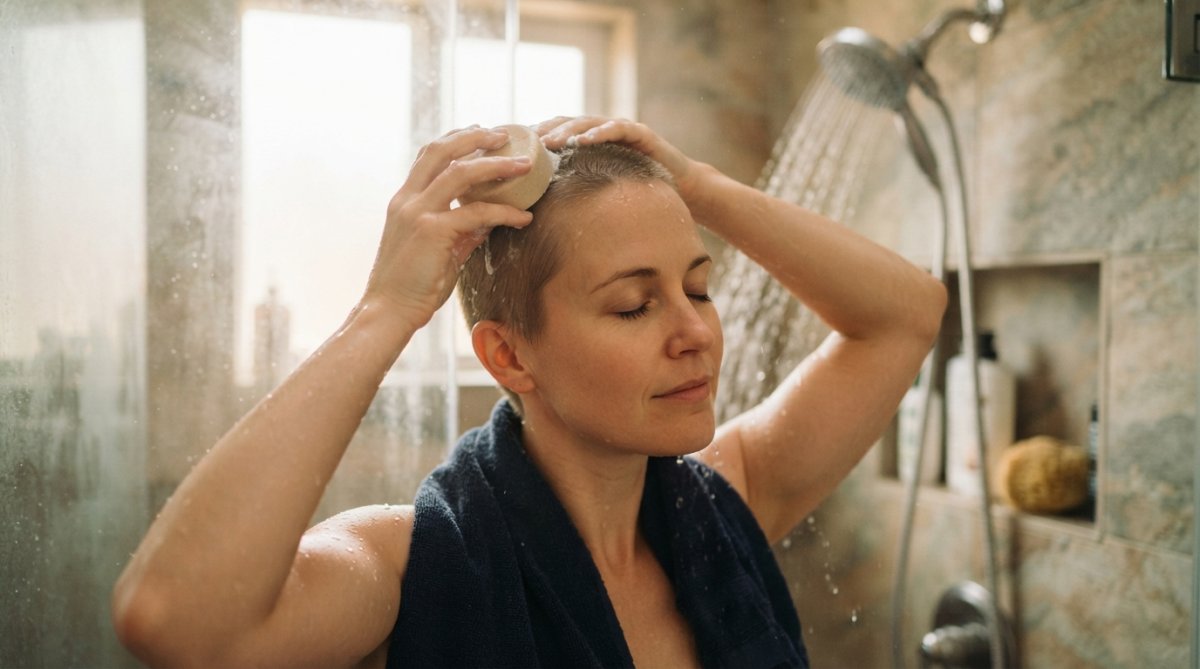
A few daily habits protect a tender scalp between washes:
- Use a soft-bristle brush or a wide-tooth comb, and never pull through tangles
- Switch to a satin or silk pillowcase to reduce friction overnight
- Wear a soft cap or scarf outdoors to block sun and cold
- Skip heat tools, color treatments, and tight hairstyles entirely
- Moisturize the scalp with a gentle, fragrance-free product if it feels tight
How to Soothe Itchy Scalp During Chemo
To soothe an itchy scalp during chemo, focus on moisture and temperature rather than scratching, scratching breaks compromised skin and opens the door to infection, a real risk when your immune system is suppressed. Try a cool compress for ten minutes when itching flares, plus a fragrance-free moisturizer. If the itch comes with a rash, oozing, or crusting, that needs a clinician's eyes.
Cold Capping and Scalp Cooling: What Shampoo Works Best
Scalp cooling, often called cold capping, narrows the blood vessels in the scalp so less chemotherapy reaches the hair follicles. It's a common hair-preservation technique, and it changes what you should put on your scalp.
Ultra Sensitive Shampoo & Body Wash Bar →
How Cold Capping Works and Why Shampoo Matters
Cold caps reduce scalp temperature to around 32°F (0°C) or slightly below during infusion, and that vasoconstriction limits how much chemo drug reaches the follicles. But the cap only works if it makes full contact with the scalp, product residue, oils, or heavy conditioner create a barrier that reduces cooling efficiency. That's why the shampoo you use before a session matters: a clean, product-free scalp gives the cap the best chance to work.
The Day-Before and Day-Of Routine
The day before a cold cap session:
- Wash with a gentle, fragrance-free, sulfate-free shampoo. No conditioner on the scalp.
- Skip leave-in products, oils, serums, and styling creams.
- Don't use dry shampoo, it leaves residue.
The morning of a session:
- Do not wash your hair. The scalp should be clean but not freshly washed, which can leave it more sensitive.
- Do not apply any product to the scalp.
- If your scalp feels dry, a tiny amount of fragrance-free moisturizer on the ends only, never the scalp.
After a session:
- Wait at least 24 hours before washing. The scalp is recovering from cold exposure and is more fragile.
- When you do wash, use lukewarm water and the same gentle formula.
- Expect some tightness and dryness. A fragrance-free moisturizer can help.
Shampoo Compatibility with Cold Cap Systems
Different cold cap systems have different requirements. Most practitioners advise the same basic rule: keep the scalp clean and free of product residue. But a few specifics matter:
- Manual cold caps (gel packs changed every 20-30 minutes), residue buildup is a bigger issue because the cap is reapplied repeatedly. Wash thoroughly the day before.
- Automated systems (machine-controlled cooling), the cap stays in place, so initial contact is what matters most. A clean scalp the day before is sufficient.
- Both types, avoid anything with silicones, oils, or heavy conditioners. These leave a film that blocks contact.
What to Avoid During Cold Capping
- Heavy conditioners, even fragrance-free ones can leave residue. Use only on ends, never scalp.
- Oils and serums, argan, coconut, jojoba, any oil creates a barrier.
- Dry shampoo, leaves powder residue that interferes with contact.
- Styling products, gels, mousses, sprays all leave film.
- Sulfate-heavy shampoos, strip the scalp and leave it more reactive to cold.
The Transition to Regrowth
If you're combining cold capping with a hair regrowth cycle later on, the same gentle approach carries through, a clean, unirritated scalp gives follicles the best chance when they start cycling again. When treatment ends and hair begins to regrow, the scalp is still fragile, and many patients find the same fragrance-free, sulfate-free, pH-balanced shampoo works well for the first few months.
When to Pause Cold Capping
Cold capping isn't right for everyone. Talk to your care team if you experience:
- Severe scalp pain during or after sessions
- Skin breakdown, blistering, or open sores
- Persistent headache or neck pain from the cap
- Signs of infection (redness, swelling, fever)
When to Call Your Care Team About Scalp Changes
Call your oncology team if you notice signs of infection or a reaction that isn't improving. A suppressed immune system turns a minor scalp issue into a serious one quickly, and your care team would rather hear about it early.
Contact your care team for:
- Open sores, blisters, or skin that is weeping or crusting
- Redness or swelling that spreads beyond the scalp
- Fever alongside any scalp change
- Severe pain that interferes with sleep
- A rash that appears suddenly or worsens over a day
Conclusion
A sensitive scalp during treatment narrows your options, but it doesn't leave you without any. Fragrance-free, sulfate-free, pH-balanced formulas do the job without stripping a moisture barrier that's already under strain.
Frequently Asked Questions
What is the best shampoo for chemo head patients?
The best choice is a fragrance-free, sulfate-free bar or liquid shampoo with a short ingredient list. Look for products labeled hypoallergenic and free of parabens, phthalates, and silicones. The Ultra Sensitive Shampoo & Body Wash Bar ($14.00) is a solid option: it has five ingredients, is clinically tested for sensitive scalp, and contains no sulfates, parabens, or added fragrance.
What ingredients should be avoided in shampoo during chemotherapy?
Avoid sulfates (harsh surfactants that strip the moisture barrier), synthetic fragrance, parabens, phthalates, and silicones. These can trigger scalp irritation, dryness, and itching when your dermal sensitivity is already elevated. Check labels for fragrance-free and sulfate-free claims, and scan the ingredient list for short, recognizable names rather than long chemical compounds.
Is it safe to use baby shampoo on a chemotherapy-sensitive scalp?
Baby shampoo is gentler than most adult formulas, but many baby shampoos still contain fragrance and mild sulfates that can irritate a chemo-sensitive scalp. A fragrance-free, sulfate-free product designed for sensitive skin, like a solid bar shampoo with a five-ingredient formula, offers more targeted relief than a standard baby shampoo.
How do I soothe an itchy scalp during chemo?
Wash with lukewarm water, not hot, and use a fragrance-free, sulfate-free shampoo. Pat dry instead of rubbing. Apply a gentle, non-comedogenic moisturizer or emollient to the scalp if your care team approves. Avoid scratching; instead, press a cool compress against the area for a few minutes. If itching persists or worsens, contact your oncology team.
What kind of shampoo should I use for thinning hair after chemotherapy?
Once regrowth begins, continue using a gentle, pH-balanced shampoo that supports follicle health without stripping natural oils. The Ultra Sensitive Conditioner & Shave Bar ($14.00) pairs well with the shampoo bar and can be used as a leave-in for extra moisture. Avoid heavy silicones that coat the hair shaft and weigh down new growth.