

GiftBoxLoveCo Alternative for Recovery Gifts
Table of Contents
- Why Shoppers Look for a GiftBoxLoveCo Alternative for Recovery Gifts
- Recovery Gift Box Comparison: Pricing, Contents, and Best Uses
- Gifts for Someone Recovering From Surgery: What Actually Helps
- What to Put in a Recovery Gift Basket: A Practical Checklist
- How to Choose a Self-Care Gift Box That Fits the Recipient
- Get Well Gift Boxes for Chemo, Surgery, and Hard Days
- Accessibility, Dietary Needs, and What to Avoid
- Conclusion: Choosing Your Recovery Gift With Confidence
- Frequently Asked Questions
Last Updated: October 5, 2026
Why Shoppers Look for a GiftBoxLoveCo Alternative for Recovery Gifts
Searching for a GiftBoxLoveCo alternative for recovery gifts usually starts with a specific problem: the box looked beautiful online but did not match the person who needed it. Someone recovering from surgery does not need decorative bath salts, they need warmth, hydration, nausea relief, and rest.
That mismatch is the core issue: most recovery gifts are curated for the giver's taste, not the recipient's recovery stage. This guide from Main Street Stylists Boutique compares what recovery gift boxes contain, what they cost, and which fits which situation.
A recovery gift box is a curated package of comfort and practical items assembled for someone healing from surgery, illness, or treatment. The best ones are built around real patient needs rather than generic pampering.
Recovery Gift Box Comparison: Pricing, Contents, and Best Uses
Our recovery gift boxes differ by recovery stage, budget, and symptom managed. Each was shaped by feedback from more than 500 cancer patients and gift buyers, so contents skew practical rather than decorative.
| Gift Box | Price | Best For | Standout Contents |
|---|---|---|---|
| Sweetest Rest & Recovery Box | $174.99 | Long recovery, maximum comfort | Porcelain teapot, weighted lavender eye pillow, throw blanket, 2 pairs cozy socks |
| The Perfect Chemo Nausea Relief Box | $64.99 | Nausea and appetite loss | Ginger mints and non-prescription relief tools |
| The Optimal Chemo Care Box | $59.99 | Chemo days, warmth and hydration | Plush throw blanket, stainless tumbler with straw, cuticle oil, bergamot oil |
| Men's Cancer Care Box | $49.99 | Men in treatment, entry-level gift | Ginger mints, unscented lip balm, tumbler, boxed cookies |
| Men's Chemo Care Package | $49.99 | Men needing symptom support | Botanical body cream, ice pack, acupressure wristbands, mouthwash tablets |
What to Compare Before You Buy
Three things separate a useful recovery gift from a forgettable one: the recovery stage it targets, whether the contents address a real symptom, and whether the recipient can use everything inside.

- Recovery stage: A post-surgery box needs warmth and rest items. A chemo box needs nausea and skin care.
- Symptom match: Ginger mints, cuticle oil, and body cream solve specific problems. Scented candles usually do not.
- Size tiers: Most of our boxes come in Essentials, Comprehensive, and Tremendous, so you can scale up as recovery continues.
Gifts for Someone Recovering From Surgery: What Actually Helps
Gifts for someone recovering from surgery work best when they reduce effort, not add clutter. Warmth, hydration, and something to occupy a long afternoon beat almost everything else.
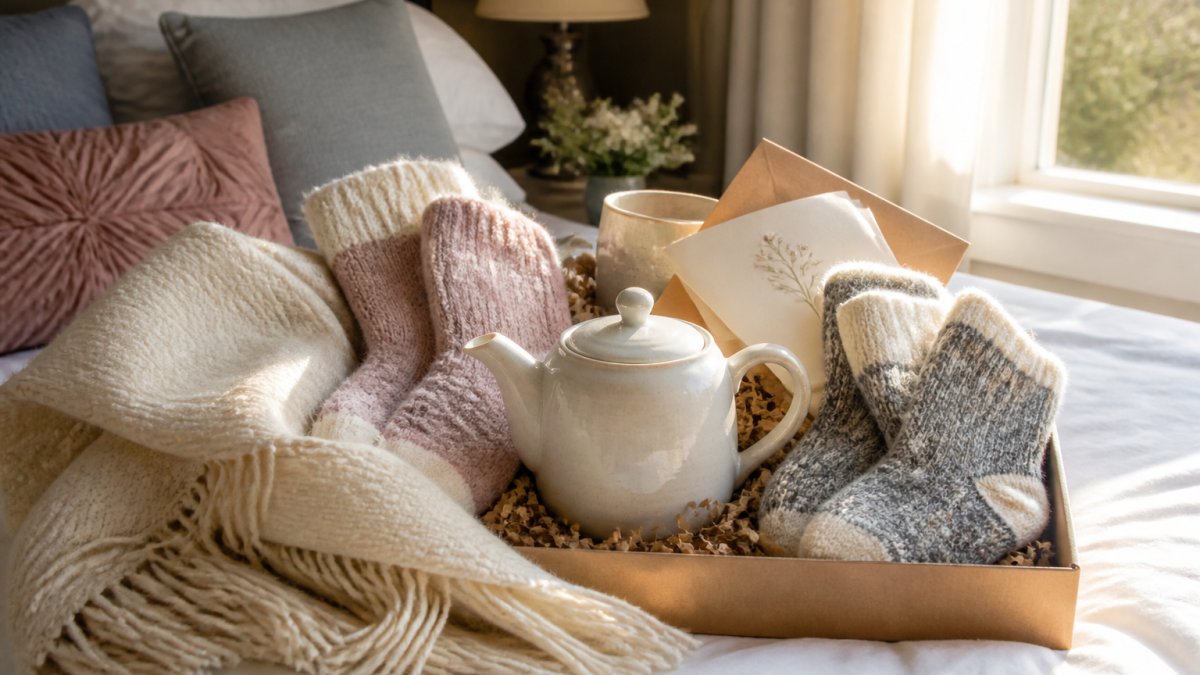
A common mistake is buying a spa-themed basket for someone who just had an operation. Hospital rooms and recovery beds are cold, and patients are told to walk and hydrate.
For longer recoveries, add something that structures the day.
What to Put in a Recovery Gift Basket: A Practical Checklist
A good recovery gift basket answers four needs: warmth, hydration, nausea relief, and something to do. Build around those categories and you will rarely go wrong.
- A soft throw blanket that is washer-safe
- Cozy socks, ideally two pairs, for hospital chill and tender feet
- A tumbler with a straw for easy hydration during treatment
How to Choose a Self-Care Gift Box That Fits the Recipient
Most buyers start with the box, then bend it around the recipient. Better to start with the recipient and let the box follow. Four variables do most of the work: relationship, recovery stage, care setting, and what the person can physically reach and use.
Step 1: Match the box to the relationship
The closer you are, the more personal and practical the gift can be; the more distant, the more neutral.
- Partner, parent, or sibling: A larger, multi-week box makes sense because you will likely be present to help them use it. The Sweetest Rest & Recovery Box at $174.99 is built for this role, with a throw blanket, weighted lavender eye pillow, porcelain teapot, and two pairs of cozy socks.
- Close friend or coworker: A mid-tier box that covers one clear symptom reads as thoughtful without feeling overfamiliar. The Optimal Chemo Care Box at $59.99 or The Perfect Chemo Nausea Relief Box at $64.99 fit here.
- Acquaintance, neighbor, or a colleague you have not met in person: Keep it small, unscented, and non-medical in tone. The Men's Cancer Care Box at $49.99 works as an entry-level option, and a smaller box with mints, socks, and a blanket is often the safer call than a large themed package.
Step 2: Match the box to the recovery stage
Recovery is not one event. The needs at day three after surgery are not the needs at week six of chemotherapy.

- Immediate post-op (first two weeks): Warmth, hydration, and low-effort comfort. A tumbler with a straw, a washer-safe throw, and socks that do not press on incisions or swollen feet. Skip anything that requires standing, mixing, or assembly.
- Active treatment (chemo, radiation, infusion days): Nausea relief, skin and nail care, and something to occupy long chair time. Ginger mints, cuticle oil, fragrance-free body cream, and a planner all earn their place here.
- Extended recovery (weeks to months): The gift that keeps working is the one that structures the day. A tear pad planner, a designer pen, and a comfort item like a coloring book with pencils do more over a long stretch than a single indulgent item.
Step 3: Match the box to the care setting
Where the person is recovering changes what is useful and allowed.
- At home: Almost anything works, including items that need a microwave, a freezer, or a sink. This is where the Sweetest Rest & Recovery Box and the larger tiers make the most sense.
- In a hospital or inpatient facility: Space is limited, surfaces are shared, and strong scents travel. Fragrance-free body cream, unscented lip balm, a tumbler, and a small throw are safer than anything perfumed or bulky. Confirm the facility's delivery rules before shipping directly, and check whether flowers or live plants are restricted.
- In a skilled nursing or rehab facility: Mobility and storage matter more. Choose items that fit on a bedside table and do not require the recipient to bend, lift, or reach. Weighted items can help some people and feel restrictive to others, so ask before sending.
Step 4: Match the box to what the recipient will actually reach for
The final filter is physical and sensory. Ask three questions:
Sweetest Rest & Recovery Box →
- Can they open it, lift it, and use each item without help?
- Does anything in the box conflict with a dietary restriction, allergy, or scent sensitivity?
- Is there at least one item they will use in the first 48 hours?
If the answer to the third question is no, the box is decorative, not useful. A $49.99 box that addresses the recipient's actual side effect outperforms a $174.99 box full of items they cannot use.
Get Well Gift Boxes for Chemo, Surgery, and Hard Days
Get well gift boxes should match the intensity of what the person is going through. Chemotherapy, surgery, and a hard week after a diagnosis call for different contents.
Chemo care leans on nausea relief, skin and nail care, and warmth, hence our chemo boxes' ginger mints, cuticle oil, botanical body cream, and plush throw blanket. Surgery recovery leans on rest, hydration, and gentle movement, which the weighted lavender eye pillow and tumbler support.
Accessibility, Dietary Needs, and What to Avoid
Accessibility and dietary fit are the most overlooked parts of buying recovery gifts. A box that ignores them creates work instead of relief, and so does the message that comes with it.
Dietary needs and product sensitivities
- Read every label before you send. Ginger mints, boxed cookies, and any other edible item should be checked against allergies, diabetes management, and any diet the recipient follows. When in doubt, choose a box with fewer edible items and more practical comfort items.
- Assume scent sensitivity until you know otherwise. Treatment can change how a person perceives smell, and a strong candle that seemed thoughtful can become the item they ask someone to take out of the room. Fragrance-free body cream and unscented lip balm are safer defaults than anything perfumed.
- Check topical ingredients. Botanical body creams, cuticle oils, and lip balms can conflict with sensitive skin, active rashes, or a clinician's instructions about what to apply near a treatment site. If you are unsure, ask the recipient or a family member before sending.
What to avoid in a recovery gift
- Alcohol. It can conflict with medications and with sobriety, and it is rarely appropriate during active treatment.
- Strong fragrances. Perfumed candles, potpourri, and scented lotions are the most common regretted gift in a recovery setting.
- Anything requiring assembly or setup. If it needs tools, batteries, or instructions, it is not a recovery gift.
Hospital and facility delivery etiquette
Delivery rules vary by facility, and getting this wrong means the gift never reaches the recipient.
- Confirm the facility's policy before shipping. Many hospitals restrict flowers, live plants, latex balloons, and outside food. Some limit deliveries to certain hours or require them to go through a volunteer desk.
- Use the recipient's legal name and room number if you have them. A box addressed to a nickname may sit unclaimed.
- Time it to the stay, not the diagnosis. A gift that arrives after discharge has to be forwarded or picked up. If you are unsure how long the stay will be, ship to the home address instead.
What to write in the card
A short, specific message lands better than a long one. Name the practical thing you are offering, not the illness.
- Say: "Thinking of you. This is for the long afternoons. No need to reply."
- Say: "I am bringing dinner on Thursday. Text me if that day stops working."
- Avoid: "Let me know if you need anything." It puts the work back on the recipient.
Conclusion: Choosing Your Recovery Gift With Confidence
The right recovery gift does not need to be expensive. It needs to match the person, the stage, and the symptom.
At Main Street Stylists Boutique, our care packages are shaped by feedback from hundreds of patients and gift buyers. If unsure where to start, the Sweetest Rest & Recovery Box covers rest, warmth, and daily structure, while the Men's Cancer Care Box and The Optimal Chemo Care Box offer smaller entry points at $49.99 and $59.99.

Recovery is unpredictable, and finding a gift that helps rather than sits unopened is harder than it should be. Main Street Stylists Boutique builds care packages around real patient feedback, with comfort-focused items for people healing from surgery, illness, or treatment.
Frequently Asked Questions
What is a good recovery gift for someone recovering from surgery?
A good recovery gift addresses comfort and practical needs during healing. Soft blankets, cozy socks, and gentle skincare items help with physical comfort, while a planner or coloring book supports rest and mental distraction. The Sweetest Rest & Recovery Box includes a lavender weighted eye pillow, two pairs of cozy socks, a throw blanket, and a daily planner, all chosen from feedback from over 500 patients and gift buyers. Focus on items that make rest easier rather than items that require effort.
What can I put in a recovery gift basket?
Start with warmth and hydration: a soft throw blanket, cozy socks, and a stainless steel tumbler with a straw. Add nausea-friendly items like ginger mints, skin care such as botanical body cream or cuticle oil, and a small comfort like a coloring book or teapot. The Optimal Chemo Care Box combines many of these items, including a plush throw blanket, ginger mints, a tumbler, cozy socks, cuticle oil, and bergamot oil, so you can build around a tested set rather than guessing.
Are self-care gifts appropriate for someone recovering?
Yes, when they are practical rather than indulgent. Items that support rest, hydration, and symptom relief fit recovery well. A self-care gift box with a weighted eye pillow, unscented lip balm, or fragrance-free body cream respects sensitive skin and low energy. Avoid strongly scented products or anything that requires the recipient to do work. The Men's Cancer Care Box includes unscented lip balm and ginger mints specifically chosen for treatment side effects like dry lips and nausea.
How do I choose a useful gift for someone who is ill?
Match the gift to their treatment stage and daily challenges. For chemotherapy, prioritize nausea relief, warmth, and hydration. For surgery recovery, focus on comfort items and easy rest. The Perfect Chemo Nausea Relief Box centers on ginger mints for taste changes and nausea. If you are unsure, choose a box with tiered sizes so the recipient can use what fits their energy level. Asking a caregiver what the person needs most is the fastest way to avoid a mismatch.