

How to Soothe Scalp During Chemo: 7 Gentle Steps
Table of Contents
- Why Chemo Makes Your Scalp Sore and How to Soothe Scalp During Chemo
- Your Daily Scalp Care Routine: How to Soothe Scalp During Chemo Step by Step
- Choosing Gentle Hair Products for Sensitive Scalps
- What Is the Best Shampoo for Chemo Patients?
- Natural Oils, Moisturizers, and Cold Compresses for Topical Relief
- Scalp Care After Chemotherapy: Post-Treatment Transition and Regrowth
- Protecting Your Scalp from Sun, Cold, and Common Mistakes
- Frequently Asked Questions
Last Updated: October 2, 2026
Why Chemo Makes Your Scalp Sore and How to Soothe Scalp During Chemo
Chemotherapy attacks fast-dividing cells, and hair follicles are some of the fastest-dividing cells in your body. That is why hair loss is common during treatment. It is also why your scalp can feel tender, itchy, or raw. The good news: small, consistent steps can calm most of that discomfort. This guide walks you through how to soothe scalp during chemo, step by step, using gentle products and simple habits.
What Chemotherapy Does to Hair Follicles
Chemo drugs target cells that divide quickly. Hair follicles divide quickly, so they get caught in the crossfire. The result is follicle inflammation, which causes soreness, itching, and tenderness.
The Emotional Weight of Scalp Pain
Losing your hair is hard. The physical soreness makes it harder. Many patients say the scalp pain is a constant reminder of treatment, which can wear on mood and sleep.
Your Daily Scalp Care Routine: How to Soothe Scalp During Chemo Step by Step
A simple morning and evening routine does more for a tender scalp than any single product. The goal is gentle cleansing, steady moisture, and no friction.
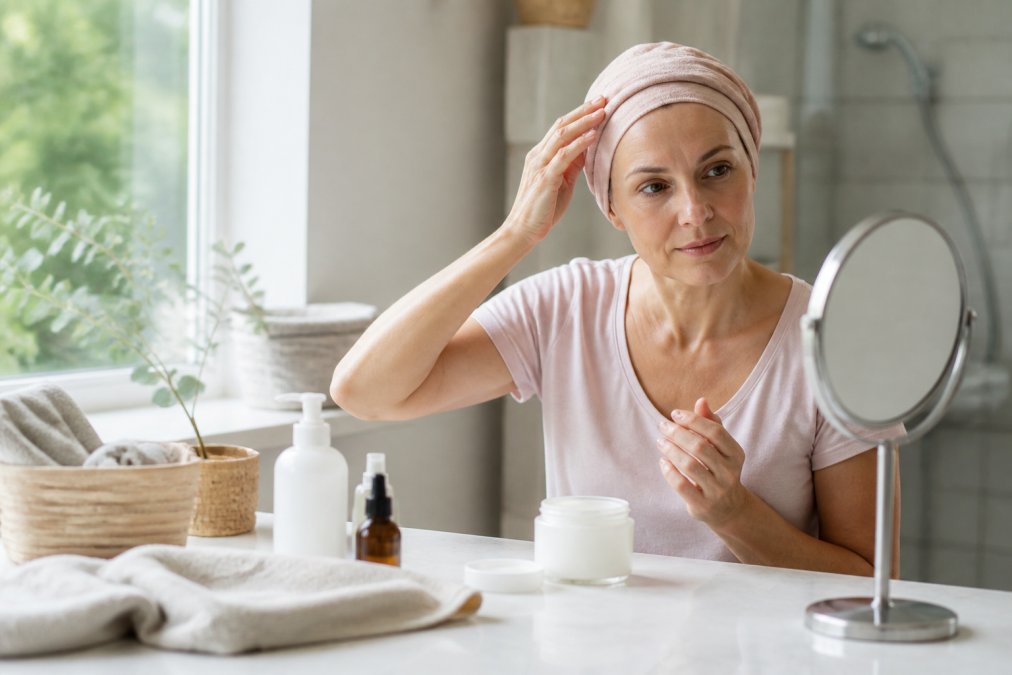
Morning: Gentle Cleansing and Moisture
- Wet your scalp with lukewarm water. Hot water strips oil and stings.
- Use a mild shampoo or a fragrance-free cleansing bar. Lather in your hands first.
- Massage with fingertips only. Never scratch with nails.
- Rinse fully. Leftover product causes itching.
- Pat dry with a soft towel. Do not rub.
- Apply a light moisturizing cream or oil while skin is still damp.
A pH-balanced cleanser protects the scalp's barrier. Skip anything with sulfates, heavy fragrance, or alcohol.

Evening: Barrier Repair and Nighttime Care Protocols
Nighttime is when most irritation builds. Your head rests on a pillow for hours, and friction adds up.
- Use a satin or silk pillowcase to cut friction.
- Apply a thicker emollient before bed to lock in moisture.
- Try a cold compress for ten minutes if the scalp feels hot.
- Keep the room cool. Heat makes inflammation worse.
- Wear a soft, loose cap if you are cold. Avoid tight bands.
Choosing Gentle Hair Products for Sensitive Scalps
Gentle hair products for sensitive scalps share a few traits: few ingredients, no fragrance, and no harsh cleansers. Read the label before you buy.
Look for these words on the bottle:
- Fragrance-free (not "unscented," which can still contain masking scents)
- Hypoallergenic
- Sulfate-free
- Paraben-free
- Dye-free
What Is the Best Shampoo for Chemo Patients?
The best shampoo for chemo patients is a mild, fragrance-free, pH-balanced cleanser with a short ingredient list. It should clean without stripping, and it should never sting, burn, or leave a residue that triggers itching.
Safe vs. Avoid: A Label-Reading Cheat Sheet
This is the ingredient breakdown most guides skip. Read the back of the bottle, not the front.
Generally considered safe for a sensitized scalp:
- Glycerin, a humectant that pulls water into the skin barrier.
- Panthenol (provitamin B5), soothing and lightly moisturizing.
- Colloidal oatmeal, a well-known skin calmer used in eczema care.
- Sodium cocoyl isethionate, a mild, coconut-derived surfactant that cleans without the bite of sulfates.
- Coco-glucoside and decyl glucoside, non-ionic, sugar-based cleansers that are among the gentlest available.
- Shea butter, jojoba, and squalane, emollients that mimic skin's own lipids.
- Allantoin, a calming agent often used in post-procedure skin care.
Better to avoid during treatment:
- Sodium lauryl sulfate (SLS) and sodium laureth sulfate (SLES), the classic harsh detergents. They strip the barrier and amplify stinging.
- Parabens (methyl-, propyl-, butyl-), preservatives that some sensitive-skin users react to; easy to skip while the scalp is fragile.
- Synthetic fragrance and "parfum", the single most common cause of contact irritation on a compromised scalp.
- Essential oils in high concentration, peppermint, eucalyptus, tea tree, and citrus can all sting or burn.
- Alcohol denat., ethanol, and isopropyl alcohol, drying and painful on open or cracked skin.
- Formaldehyde releasers (DMDM hydantoin, diazolidinyl urea, quaternium-15), preservatives linked to contact allergy.
- Menthol, camphor, and "cooling" additives, the tingle is irritation, not relief.
- Silicones (dimethicone, cyclopentasiloxane), not dangerous, but they can trap flakes and make buildup worse when you are washing less often.
Decoding the Front of the Bottle
- "Fragrance-free" means no scent was added. This is what you want.
- "Unscented" means a masking fragrance may have been added to neutralize the smell of raw ingredients. It can still trigger a reaction.
- "Hypoallergenic" is a marketing term, not a regulated standard. Treat it as a hint, not a guarantee.
- "Natural" says nothing about irritation risk. Poison ivy is natural.
- "pH-balanced" usually means formulated near skin's natural pH of about 4.5 to 5.5. A lower, more acidic pH supports the barrier.
Product Type Comparison
| Product Type | Key Traits | Best For |
|---|---|---|
| Fragrance-free bar | 5 ingredients, no sulfates | Very sensitive scalps |
| Mild liquid shampoo | pH-balanced, dye-free | Daily cleansing |
| Conditioner bar | Emollient, no silicones | Dry, tight scalp |
| Baby shampoo | Tear-free, mild | Short-term backup only, some still contain fragrance |
Main Street Stylists Boutique carries the Ultra Sensitive Shampoo & Body Wash Bar and the Ultra Sensitive Conditioner & Shave Bar, both fragrance-free and made with five ingredients. They are clinically tested for sensitive skin and scalp.

Natural Oils, Moisturizers, and Cold Compresses for Topical Relief
Simple topical relief comes from three things: oils, creams, and cold. Each works in a different way, and together they cover most of the day.
- Jojoba or sweet almond oil: closest to your skin's own oils. Apply a few drops after cleansing.
- Calendula or chamomile cream: calming for red, irritated skin.
- Bergamot or lavender oil: for scent-based calm, not for direct skin use unless diluted.
- Cold compress: wrap a soft cloth around a cool pack. Never put ice directly on skin.
- Botanical body cream: use on the scalp and neck for all-day moisture.
Scalp Care After Chemotherapy: Post-Treatment Transition and Regrowth
Scalp care after chemotherapy changes as hair starts to grow back. New hair is fragile, the scalp is still sensitive, and the products that worked during treatment may not be the ones you want six months later. This is the transition timeline most guides leave out.
Phase 1: The First 4 to 6 Weeks After Your Last Infusion
Your scalp is still reacting to the drug even though infusions have stopped. Keep the same gentle habits you used during treatment.
- Continue fragrance-free, sulfate-free cleansing.
- Keep moisturizing daily with a light emollient.
- Keep using a satin or silk pillowcase.
- Keep sun protection on the scalp, new skin burns easily.
- Do not rush back to old products just because treatment ended.
Phase 2: Weeks 6 to 12, First Regrowth
Regrowth often begins as a soft, fine fuzz sometimes called "chemo hair" or "chemo curls." It can come in a different texture or color than your original hair. That is normal and usually temporary.
- Switch to a wide-toothed comb instead of a brush.
- Skip heat tools entirely, no blow dryers on high, no flat irons, no curling wands.
- Avoid tight styles, braids, and elastics that pull at the follicle.
- Keep washing two to three times a week, not daily.
- Expect the new hair to break easily. Treat it like baby hair.
Phase 3: Months 3 to 6, When to Transition Back
This is the question readers actually search for: when can I stop using chemo-specific products? There is no single date, but a common pattern is to wait until three things are true:
- Your scalp no longer stings or itches on a normal day.
- You have at least an inch of new growth that is not breaking.
- Your care team has cleared you to resume normal hair care.
What to Keep Long-Term
Some habits are worth keeping permanently, even after your hair is back:
- Fragrance-free shampoo if you have sensitive skin.
- Sunscreen on any exposed part of the scalp, especially along the part line.
- Gentle detangling, start at the ends and work up.
- A soft hat or scarf for extended sun or cold exposure.
What to Avoid Indefinitely
- Harsh scrubs, scalp exfoliants, and clarifying treatments.
- Chemical dyes, perms, and relaxers until your care team says the scalp has fully recovered, often six months or longer.
- Tight braids, weaves, and extensions that pull at the follicle.
- Sharing combs, brushes, or hats.
If you notice new redness, swelling, or patches of hair that never return, bring it up with your care team. Most regrowth is straightforward, but a small number of patients need a dermatology referral.
Protecting Your Scalp from Sun, Cold, and Common Mistakes
- Wear a soft hat or scarf outdoors.
- Use SPF 30 or higher on exposed scalp.
- Cover up in cold weather. Cold makes tender skin ache.
- Avoid tight wigs and bands that rub.
- Skip harsh scrubs, dyes, and perms.
Common mistakes to avoid:
- Scrubbing to remove flakes (it tears skin)
- Using hot water in the shower
- Sharing combs or brushes
- Ignoring sudden redness or swelling
For a ready-made option, the Optimal Chemo Care Box bundles a soft throw, ginger mints, a tumbler, cozy socks, cuticle oil, bergamot oil, a diffuser bracelet, and botanical body cream, all chosen with input from over 500 patients and gift buyers. The Premium Soothing Skin & Lips set adds calendula soap, lip balm, and burn balm for extra skin comfort.

Frequently Asked Questions
Why is my scalp sore during chemo?
Chemotherapy attacks fast-dividing cells, including hair follicles, which causes inflammation and tenderness across the scalp. This often signals chemotherapy-induced alopecia is starting. The soreness usually peaks as shedding begins and eases within a few weeks. A cold compress, fragrance-free moisturizer, and a soft head covering can reduce discomfort while the follicles settle.
What is the best shampoo for chemo patients?
Look for a mild, pH-balanced, fragrance-free shampoo with few ingredients. The Ultra Sensitive Shampoo & Body Wash Bar from Main Street Stylists Boutique is clinically tested and safe for sensitive hair, skin, and scalp, free of sulfates, parabens, silicones, and artificial fragrance. Wash with lukewarm water and fingertips only, no scratching, and pat dry with a soft towel.
Can I use natural oils to soothe my scalp during chemo?
Yes, some oils help. Bergamot and lavender oils in a diffuser or diluted on skin offer calming scent and moisture, and botanical body cream supports barrier repair. Always patch-test first, since chemo increases chemical sensitivity, and avoid essential oils directly on broken or irritated skin unless your oncology team approves.
When does scalp pain typically subside after chemotherapy?
Most people notice scalp tenderness easing within two to four weeks after shedding begins, though timing varies by regimen. If pain is severe, lasts beyond a few weeks, or comes with redness, swelling, or open sores, call your oncology team. For ongoing scalp care after chemotherapy, keep using gentle cleansing and moisturizing products as regrowth starts.
Scalp soreness during chemo is common, but it does not have to run your day. A gentle routine, the right products, and a little patience can keep your scalp calm through treatment and into regrowth. Main Street Stylists Boutique curates fragrance-free, clinically tested hair and skin care, plus recovery boxes built with real patient feedback. Visit Main Street Stylists Boutique to find gentle products and care packages that make treatment days a little easier.